Tree Topping & Crown Reduction · Kansas City, MO

Tree Topping Kansas City -
We'll Tell You If You Actually Need It

Most crews in Kansas City will top a tree without question. Omar Tree Services crews will give you an honest assessment first, because in most cases, crown reduction or structural pruning achieves what you want without the long-term damage that topping can cause.

ISA

Certified Arborist

169★

Google Reviews

12+

Years in KC

Free

On-site assessment
The honest answer

Tree Topping Is Controversial -
Here's What We Actually Think

If you’re searching for tree topping near me in Kansas City, MO, you deserve a straight answer not a crew that tops every tree without question. Here’s what we actually think about tree topping in Kansas City, Missouri.

Tree topping, cutting the main branches back to stubs to reduce height, is one of the most debated practices in arboriculture. The ISA (International Society of Arboriculture) discourages routine topping because it leaves large wounds, triggers weak watersprout regrowth, and can stress a tree into long-term decline.

That’s the honest truth. And yet, Omar Tree Services still offer tree topping services in Kansas City, because in specific situations, it’s the right call. The difference is that we assess your tree first and tell you which situation you’re actually in.

When we’ll recommend topping: Severe storm damage, utility line conflicts, imminent structural hazard, trees in advanced decline where reducing crown load buys time.

🔄

When we’ll recommend crown reduction instead: Overgrown trees, height clearance near roofs or windows, light improvement — same visual results, far less tree stress.

What we won’t do: Top a healthy tree just because it’s big, without explaining the long-term trade-offs. You deserve to make an informed choice.

What is tree topping?

Also Called: Hat-Racking, Heading, Stubbing, Tipping

When it's the right call

3 Situations Where Tree Topping Is the Right Call in Kansas City

We only recommend topping when one of these conditions applies. If they don’t, we’ll steer you toward a better option, and explain why.
01

Power Line & Utility Conflicts

When a tree has grown into or near utility lines, the power company often mandates specific height reduction. In these cases, managed topping is a required intervention — the alternative is full removal. We work with the clearance specs and minimize damage to the tree in the process.
02
🌪️

Severe Storm Damage

After a major storm strips away most of a tree’s canopy, the remaining structure may warrant managed topping to stabilize what’s left, reduce the risk of further failure, and give the tree a viable path to recovery. This is fundamentally different from topping a healthy tree.
03
🏚️

Structural Hazard — Last Resort

A tree with serious structural defects (split codominant stems, root zone damage, advanced decay) that overhangs a structure may need emergency crown reduction to reduce load and risk while removal is planned or while options are evaluated. Safety comes first.

The key phrase is “last resort.” For most requests we get, “the tree is too tall,” “it’s blocking my view,” “it’s over my roof” crown reduction pruning achieves the goal with less damage to the tree and less risk of the rapid regrowth that makes topped trees a maintenance headache every 3–4 years.

Side-by-side comparison

Tree Topping vs. Crown Reduction - What Kansas City Homeowners Need to Kno

Both reduce tree size. Only one does it without seriously stressing your tree. Here’s exactly how they differ — so you can make an informed choice.

Factor
🪓 Hard Topping
✂️ Crown Reduction (ISA Method)
How cuts are made
Stubs — no natural branch endpoint
Cut to lateral branch (⅓ rule)
Wound healing
Large wounds, slow or no callusing
Smaller wounds, proper closure
Regrowth
Dense, weakly attached watersprouts
Natural branching, stronger structure
Tree stress
High — photosynthesis capacity sharply reduced
Moderate — managed, spreads impact
Disease risk
Elevated — large open wounds invite decay
Lower — proper cuts seal faster
Long-term tree health
Decline risk, shortened lifespan
Tree can fully recover
Maintenance cycle
Regrowth needs re-topping every 3–5 years
Normal pruning schedule resumes
ISA recommendation
Discouraged except as last resort
Endorsed — ANSI A300 standard
Size reduction achieved
Significant immediate reduction
Significant — typically 20–35% crown
What to expect

How Omar Handles Tree Topping &
Crown Reduction

We don’t show up and start cutting. Every job starts with an honest assessment by Jose Maldonado, ISA Certified Arborist, serving Kansas City, Missouri, since 2014.


1

Free On-Site Assessment

Jose or a crew lead visits, evaluates the tree’s species, health, structure, and what you’re trying to achieve. No charge, no commitment.

2

Honest Recommendation

We tell you whether topping, crown reduction, or selective pruning is the right call — and explain the trade-offs of each option clearly.

3

Expert Execution

ISA-trained crew performs the work with proper equipment. Cuts made to minimize wound size and preserve as much live canopy as safely possible.

4

Complete Cleanup

All debris hauled away. We leave the site cleaner than we found it — wood chips, branches, everything. Done same day in most cases.
Our work

Crown Reduction & Topping Across Kansas City

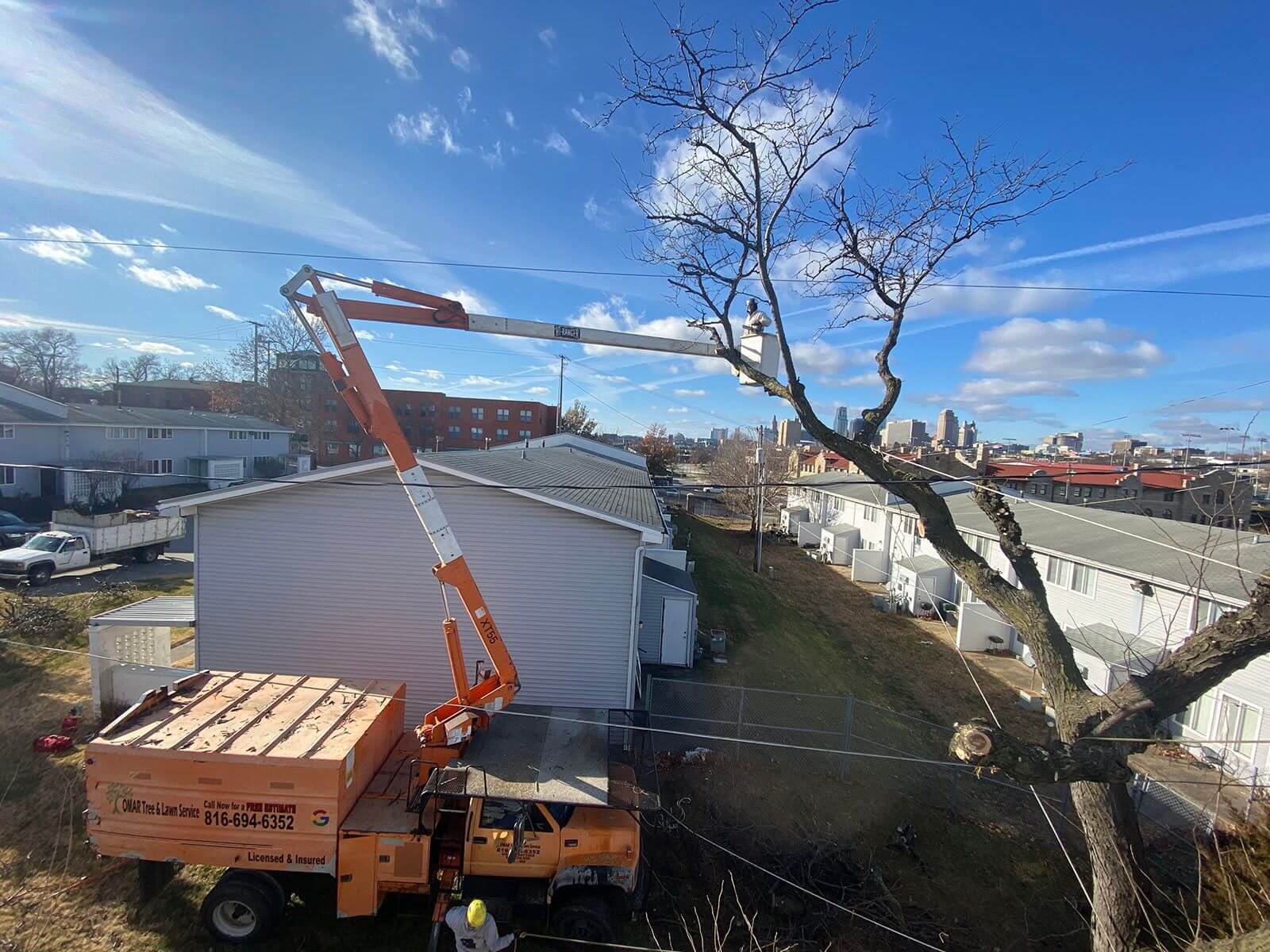
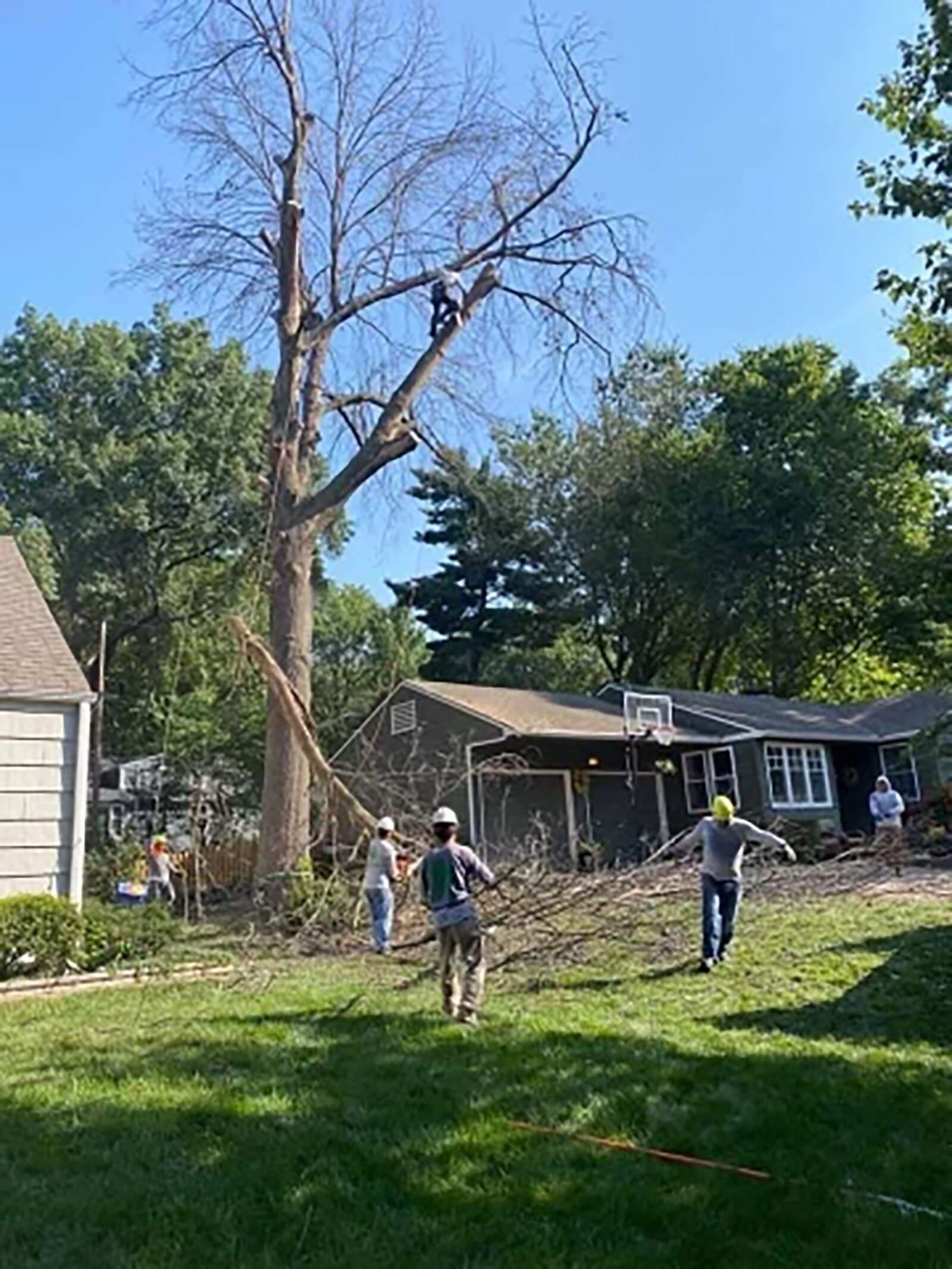
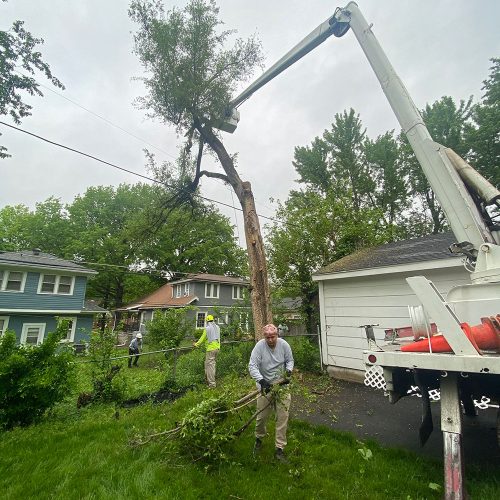
Real jobs in KC neighborhoods — before and after results from managed crown reduction and emergency topping work.

243 five-star reviews

What KC Homeowners Say

★★★★★
I had 2 huge trees in my front yard very close to my house. I had to be sure the company I used had the right equipment so I didn’t have to worry about damaging my home. Omar had the right equipment and the workers were all very skilled. This crew knows what they are doing. I’m sold!!

R

Rich Colbert
Kansas City Metro
✓ Google
★★★★★
I used Omar Tree Service for the first time and I can say that I will use them again. They did an excellent job. The price was also very reasonable. I am very happy with everything. Five stars!!!

D

David R.
Overland Park, KS
✓ Google
★★★★★
Omar and his crew are incredible. They are very efficient and did a wonderful job removing several trees and stumps. I highly recommend Omar and his company — professional, reliable, and the cleanup was spotless.

B

Brandi Palmer
Kansas City, MO
✓ Google
Common questions

Tree Topping Kansas City — Your Questions Answered

Is tree topping bad for trees?
Tree topping — cutting branches back to stubs — is considered harmful by the ISA because it leaves large wounds the tree struggles to seal, triggers weakly-attached watersprout regrowth, and can cause sunscald and long-term structural decline. That said, in specific situations (severe storm damage, imminent hazard, power line conflicts), managed crown reduction may be the best option. We assess each tree individually and only recommend topping when no better alternative exists.
Tree topping or crown reduction in Kansas City typically ranges from $400 to $1,800+ depending on tree height, species, access, and how much of the crown needs reduction. Trees near structures, power lines, or with difficult access cost more. We provide free on-site estimates — call (816) 694-6352 or use our online form and we’ll respond within 2 hours.
Many trees survive topping, but they grow back weaker. The dense watersprout regrowth that follows topping is weakly attached — it grows fast but breaks more easily in storms. A properly done crown reduction by an ISA-certified arborist, followed by follow-up pruning to manage the regrowth, gives the tree a far better long-term prognosis than trees topped by crews who cut and leave. We walk you through the aftercare plan as part of our service.
What's the difference between tree topping and crown reduction?
Tree topping cuts branches back to stubs at a predetermined height, leaving large wounds and no natural branching points. Crown reduction is an ISA-endorsed method that reduces height or spread by cutting back to lateral branches that are at least one-third the diameter of the removed limb — maintaining the tree’s natural form and allowing wounds to close properly. Crown reduction achieves similar size reduction as topping but with far less tree stress.
Situations where managed topping is genuinely the right call: severe storm damage where most of the crown is already lost; trees actively endangering structures that are too mature for gradual reduction; utility line clearance where specific height is required; and trees already in structural decline where the goal is to extend life rather than preserve form. For most other situations — overgrown trees, light issues, roof clearance — crown reduction is better.
Kansas City, MO has tree preservation rules for public trees and Heritage Trees (trunk diameter over 24 inches at breast height). Work on these may require a permit. For standard private residential trees, no permit is typically required, though HOA rules may apply. We advise you on any applicable restrictions during the free assessment — and we’re familiar with the rules across KC, Overland Park, Leawood, and other local municipalities.
Free estimate

Get an Honest Assessment — Free

Tell us about your tree and what you’re trying to achieve. We’ll come out, assess it in person, and tell you exactly what it needs: topping, crown reduction, or something else entirely. No pressure, no upsell. Check our 243 Google reviews

Request Your Free Quote
Trusted by 500+ Kansas City homeowners since 2014

Contact

"*" indicates required fields

This field is for validation purposes and should be left unchanged.
Name*
Address*

Fill out the contact form below or call us directly at (816) 694-6352. We’ll get back to you within 2 hours during business hours.