

Trees get sick. It’s not rare. It’s not dramatic. It’s just biology. Fungi, bacteria, and insects all play a role. And if you’re a homeowner, especially in a place like Kansas City where the weather swings hard and fast, you need to know how to spot trouble early and act before it spreads.
Why Tree Diseases Matter
Diseased trees aren’t just ugly. They’re dangerous. A weak limb infected with oak wilt or fire blight can snap during a storm and land on your roof. Or your neighbour’s car. Or worse.
According to Bob Vila’s guide on tree diseases, untreated infections can turn a healthy tree into a hazard fast, especially if it’s near structures, fences, or power lines.
And it’s not just about safety. Trees are expensive to replace. A mature oak or maple can cost thousands to remove and even more to replant. Prevention is cheaper. Tree trimming is part of that.
Common Tree Diseases You’ll See in the Midwest
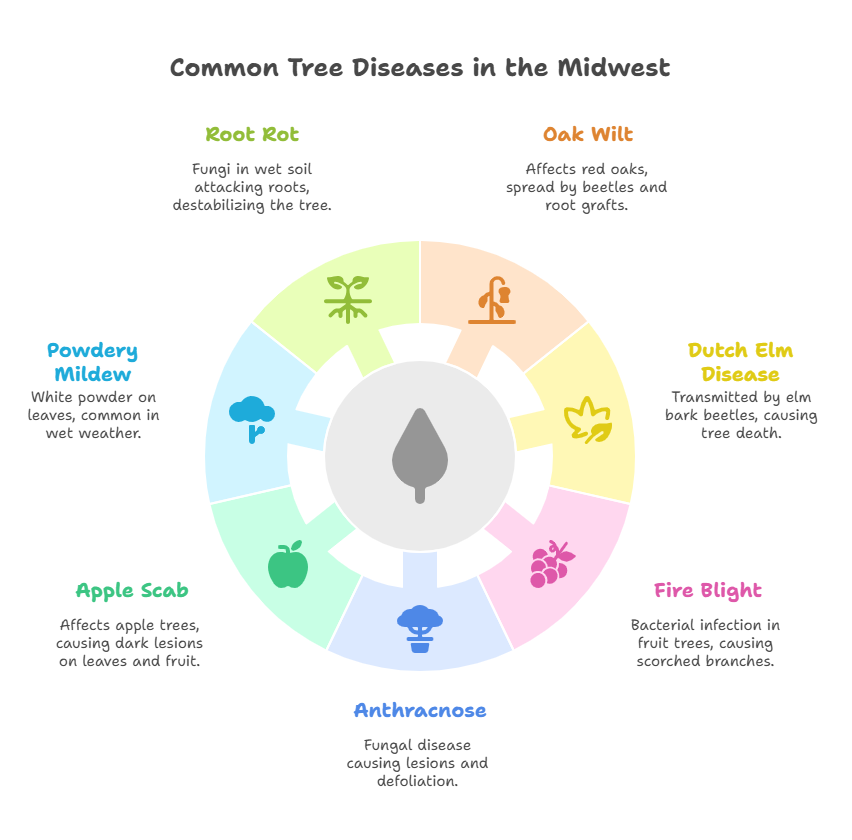
1. Oak Wilt
Oak wilt is a fungal disease that spreads through beetles and root grafts. Red oaks are especially vulnerable.
Treatment involves pruning infected branches and injecting fungicides into the root system. But timing matters. Don’t prune during beetle season (spring and early summer), because fresh cuts attract beetles that carry the fungus. Learn more about the best time to trim trees in Kansas City.
2. Dutch Elm Disease
This one’s been around for decades. Caused by a fungus spread by elm bark beetles, it blocks water transport inside the tree. Leaves turn yellow, wilt, and die. Branches follow. Eventually, the whole tree goes.
Tree pruning helps by removing infected limbs early. But you have to destroy the wood and not leave it lying around. Fungicide injections can protect healthy elms, but they’re not cheap.
3. Fire Blight
A bacterial infection that hits fruit trees, hard apples, pears, and quinces. You’ll see scorched-looking branches, blackened leaves, and sticky cankers. It spreads fast in spring, especially during wet weather.
4. Anthracnose
This fungal disease affects sycamores, maples, and oaks. It causes brown or gray lesions on leaves and can lead to defoliation. In severe cases, it can create cankers on branches.
5. Apple Scab
Affects apple trees. Causes dark, scaly lesions on leaves and fruit. Spores overwinter in fallen debris.
6. Powdery Mildew
Looks like white powder on leaves. Common in wet weather. Affects a wide range of trees.
Regular trimming helps by increasing sunlight and airflow. Fungicides can control it, but prevention is better.
7. Root Rot
Caused by fungi in wet soil. Attacks roots, destabilizes the tree. You might not see symptoms until the tree starts leaning or dying back.
How Trimming Helps and When It Doesn’t
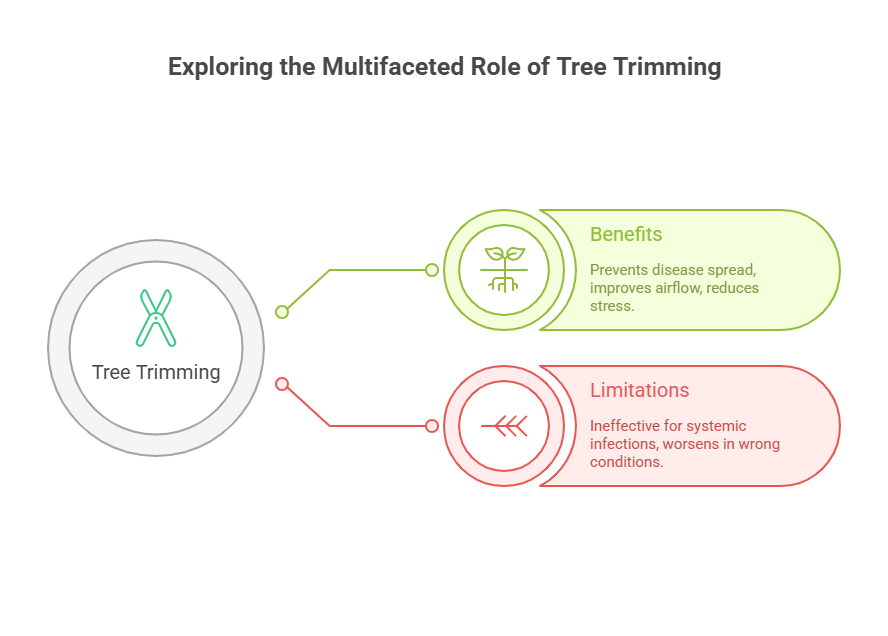
Trimming isn’t magic. It’s a tool. Used correctly, it can slow or stop the spread of disease. Used poorly, it can make things worse.
Here’s what trimming does:
- Removes infected limbs before the disease spreads to the trunk.
- Improves airflow, which reduces moisture and fungal growth.
- Reduces weight and stress, especially on diseased or dying branches.
- Prevents structural failure during storms.
But here’s what trimming doesn’t do:
- It doesn’t cure systemic infections. If the disease is in the roots or trunk, trimming won’t save the tree.
- It doesn’t work if done at the wrong time. Trimming during wet weather or beetle season can spread disease.
- It doesn’t help if tools aren’t disinfected. You can spread pathogens from one tree to another.
When to Trim
Winter is usually best. Trees are dormant. Insects are inactive. Cuts heal more slowly, but that’s okay; there’s less risk of infection.
Spring and summer are risky. Beetles are active. Fungi spread faster. If you must trim, disinfect tools, seal large wounds, and watch for signs of stress afterward. For details, see how often trees should be trimmed.
Common Mistakes Homeowners Make
Let’s be blunt. Most homeowners don’t know how to trim properly. And that’s fine, it’s not your job. But if you’re going to do it, avoid these mistakes:
- Leaving stubs. These rot and attract pests.
- Using dirty tools. This spreads disease.
- Trimming during wet weather. Fungi love moisture.
- Ignoring signs of disease. Yellow leaves, cankers, and diebacks aren’t cosmetic issues.
What Happens If You Don’t Trim
Diseased branches don’t heal themselves. They die, rot, and fall. If you don’t remove them, the disease spreads. In some cases, it reaches the trunk or roots. At that point, tree removal is the only option.
And it’s not just about the tree. Diseased limbs can fall on people, pets, or cars. They can block sidewalks or damage fences. Home insurance may not cover tree removal if you ignore obvious signs.
When to Call a Professional
If you see:
- Large cankers near the trunk
- Multiple limbs are dying back
- Mushrooms near the base
- Bark peeling or cracking
- Sudden leaf drop in midsummer
Call a certified arborist. Don’t guess. Diagnosis matters. A professional can identify the disease, recommend treatment, and trim safely. Check out our Kansas City tree pruning services to get started.
Final Notes
Trimming is part of tree care, not the whole picture. Watering, fertilizing, and monitoring all matter. But trimming is what you do when something’s wrong. Or when you want to prevent something from going wrong.
If you’re in Kansas City, diseases like oak wilt and fire blight are common. Weather swings, dense neighbourhoods, and old trees make it worse. Stay alert. Trim smart. And when in doubt, get help from a pro.
Jose Maldonado
Owner, Omar Tree Service LLC
Located: 3020 Bellaire Ave, Kansas City, MO
Phone: +1 (816) 694-6352
READ MORE